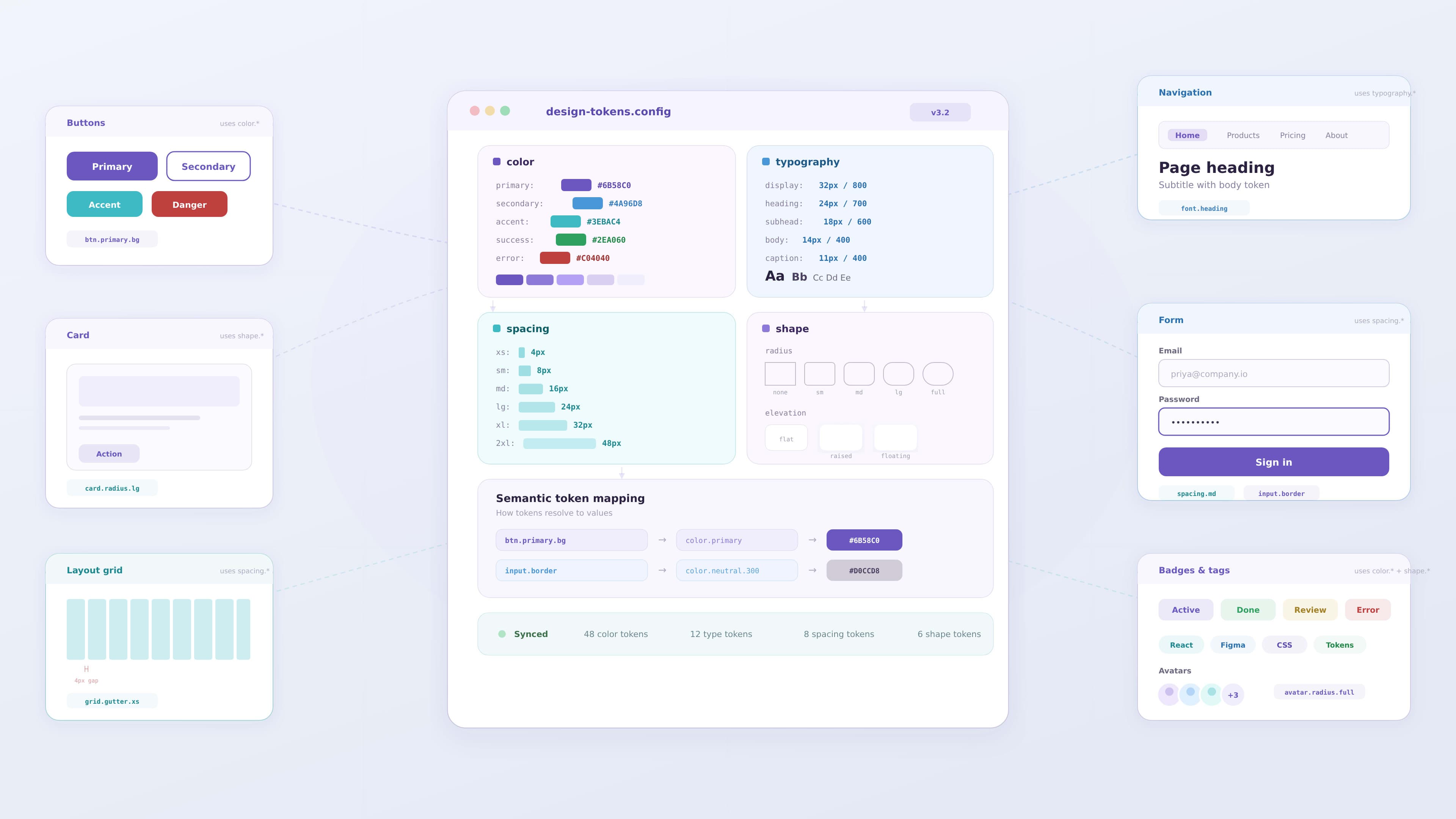
Design Tokens Explained for Designers and Developers
Modern digital products often contain hundreds of UI components across multiple screens and platforms. Maintaining visual consistency across these interfaces can become extremely difficult as products grow.
Design tokens help teams solve this challenge by creating a shared system that connects design decisions with development implementation.
Instead of manually defining design values in multiple places, teams can store design decisions such as colors, spacing, typography, and shadows as reusable tokens.
This approach helps designers and developers maintain consistency while making updates easier to manage.
What Are Design Tokens
Design tokens are small pieces of design information that represent visual decisions used throughout a product.
These tokens store design values in a structured format so they can be reused across the entire interface.
Instead of writing specific values repeatedly, teams reference tokens that represent those values.
Examples of common design tokens include:
- primary brand color
- typography sizes
- spacing values
- border radius
- shadow styles
For example, instead of using a color value like #2563EB in multiple places, designers and developers can reference a token such as primary-color
Design tokens act as the bridge between design and development.
When both teams use the same tokens, the product maintains consistent visual styles across different platforms.
Why Design Tokens Are Important
As digital products scale, maintaining consistency becomes more challenging.
Without a token system, teams may accidentally use different colors, spacing values, or typography sizes across the interface.
Design tokens solve this problem by standardizing design decisions.
Benefits of design tokens include:
- maintaining consistent visual design
- simplifying design updates
- improving collaboration between designers and developers
- supporting scalable design systems
By centralizing design values, tokens allow teams to update product styles quickly and efficiently.
Types of Design Tokens
Design tokens typically represent different types of visual properties used across the interface.
Color Tokens
Color tokens define the colors used in the product interface.
Examples include:
- primary brand color
- secondary color
- background color
- text color
- success and error colors
Color tokens help ensure that colors remain consistent across all components.
Typography Tokens
Typography tokens define font related properties such as size, weight, and line height.
Examples include:
- heading font size
- body text size
- caption text size
- font weight values
- line height settings
Typography tokens ensure consistent text styling across the entire product.
Spacing Tokens
Spacing tokens define consistent spacing values used throughout layouts.
Examples include:
- small spacing
- medium spacing
- large spacing
- layout padding
- component margins
Using spacing tokens helps maintain visual rhythm across interfaces.
Border and Shadow Tokens
Tokens can also represent UI styling details such as borders and shadows.
Examples include:
- border radius values
- card shadow styles
- modal elevation shadows
These tokens ensure UI components maintain consistent styling.
How Design Tokens Work in Practice
Design tokens are typically stored in structured formats such as JSON files.
These files can then be used by design tools and development frameworks.
Example token structure:
{
"color-primary": "#2563EB",
"spacing-small": "8px",
"spacing-medium": "16px",
"font-heading": "24px"
}
Developers can reference these tokens in CSS or design frameworks.
Example usage:
.button {
background-color: var(--color-primary);
padding: var(--spacing-medium);
}
This system ensures that UI elements always use standardized design values.
Design Tokens and Design Systems
Design tokens are a core part of modern design systems.
While design systems define reusable components and guidelines, tokens define the foundational design values used within those components.
For example:
- tokens define colors and spacing
- components use those tokens
- design systems document how components should be used
This layered structure allows products to scale while maintaining consistency.
How Designers Use Design Tokens
Designers typically work with tokens through design tools such as Figma.
In these tools, tokens are often represented as:
- color styles
- typography styles
- spacing variables
- component properties
Using tokens inside design tools ensures designers maintain consistent visual styles across all screens.
Designers can also update tokens to quickly change product styles across multiple designs.
Collaboration Between Designers and Developers
One of the biggest advantages of design tokens is improved collaboration.
Designers define tokens within design tools and design systems.
Developers reference the same tokens within code.
This shared system ensures that the final product closely matches the design specifications.
Instead of manually translating design values into code, developers can directly reference token values.
This reduces implementation errors and speeds up development workflows.
Example: Updating a Product Color System
Imagine a company decides to change its primary brand color.
Without design tokens, developers would need to manually update color values throughout the codebase.
This could involve changing hundreds of instances across multiple components.
With design tokens, the team only needs to update the token value.
Once the token is updated, the new color automatically applies across all components that reference it.
This approach saves time and prevents inconsistencies.
Common Mistakes When Using Design Tokens
Teams sometimes misuse tokens or create too many variations.
Common mistakes include:
- creating too many token values
- inconsistent naming conventions
- mixing token values with raw design values
- failing to document token usage
To avoid these issues, teams should establish clear naming conventions and documentation.
Key Takeaways
Design tokens play a critical role in scalable product design.
Important benefits include:
- maintaining visual consistency across products
- simplifying design updates
- improving collaboration between designers and developers
- supporting scalable design systems
Teams that implement design tokens effectively can manage complex design systems with greater efficiency.
Conclusion
Design tokens provide a powerful method for connecting design decisions with development implementation.
By organizing design values into reusable tokens, teams can build digital products that remain consistent, scalable, and easier to maintain.
As digital products continue to grow in complexity, design tokens will remain a foundational element of modern design systems.