Dashboard

PartnerMesh - B2B Partner Distribution Platform

A B2B partner distribution portal that enables channel partners to browse hardware and software catalogs, manage orders, track invoices, monitor credit limits, and streamline financial operations.

SaaS PlatformB2B PortalEnterprise DashboardPartner ManagementProduct CatalogOrder ManagementFinancial OperationsUX Case Study
PartnerMesh - B2B Partner Distribution Platform - UI/UX design case study by Saurabh Pansari

1. Project Hero

🚀 PartnerMesh – B2B Partner Distribution Platform

PartnerMesh is a centralized partner portal designed for vendors and distribution partners to manage product procurement, financial operations, and business analytics within a unified SaaS platform.

The platform enables channel partners to discover products, place orders, track invoices, monitor credit limits, and manage internal users through a structured dashboard interface.

The goal of the platform is to streamline the partner ecosystem, reduce operational friction, and provide transparent visibility into orders, payments, and business performance.

By integrating product catalogs, financial operations, and analytics into one system, PartnerMesh improves efficiency for both vendors and partner organizations.
2. Project Overview

📊 Platform Overview

PartnerMesh is a B2B SaaS portal designed to simplify how distribution partners interact with vendors.

Traditionally, partner workflows such as onboarding, ordering, invoicing, and payments are handled through emails, spreadsheets, or disconnected systems.

PartnerMesh transforms this fragmented workflow into a single digital ecosystem.

The platform enables partners to:

• Complete business onboarding and compliance verification
• Discover hardware and software products through structured catalogs
• Place orders or request product quotations
• Track order timelines and delivery status
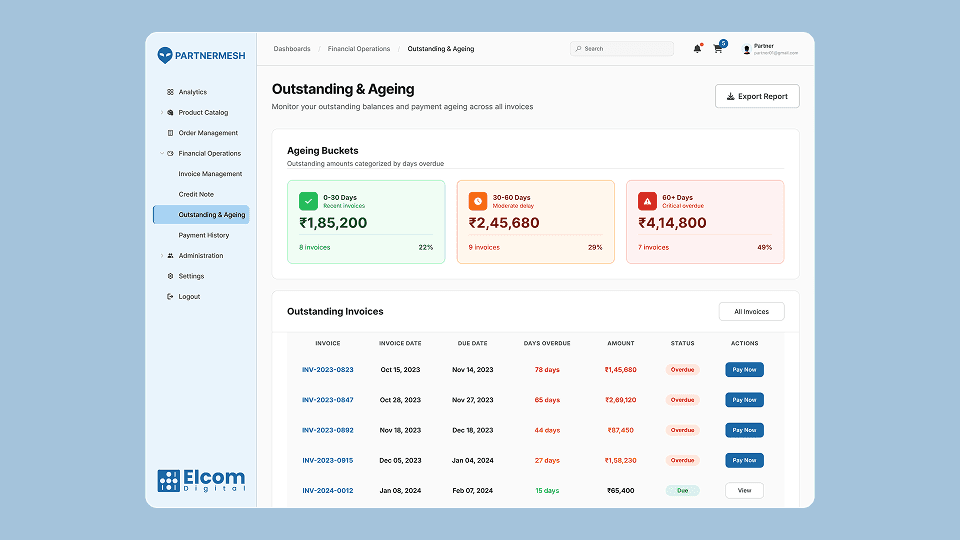
• Manage invoices, credit notes, and payment history
• Monitor outstanding balances and credit utilization
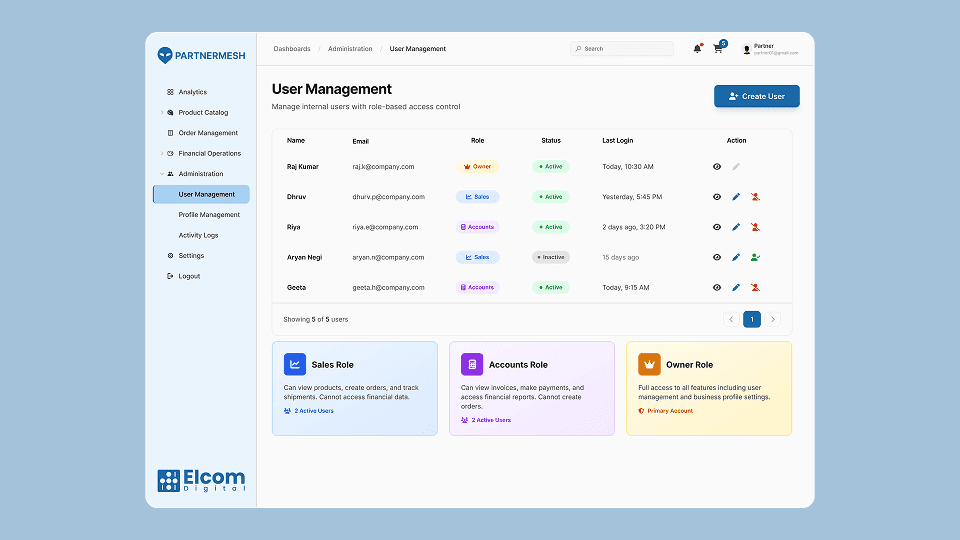
• Manage internal team members through role-based access

The result is a transparent, scalable, and efficient partner management platform.

3. Problem Statement

⚠️ Operational Challenges in Partner Distribution

Distribution ecosystems often suffer from fragmented workflows that create operational inefficiencies.

Partners frequently rely on manual processes for product discovery, order placement, invoice tracking, and financial reconciliation.

Key problems identified:

• Lack of centralized product catalogs for partners
• Manual quotation and order processes
• Limited visibility into invoices and payment status
• Poor tracking of outstanding balances and credit limits
• Difficulty managing internal users across partner organizations

These challenges create delays, increase operational complexity, and reduce transparency across the partner ecosystem.

4. Goals & Objectives

🎯 Product Goals

The objective of PartnerMesh was to design a structured partner portal that simplifies distribution workflows while improving transparency and operational control.

Primary goals included:

• Centralize partner operations in a single platform
• Simplify partner onboarding and compliance verification
• Enable easy discovery of hardware and software products
• Provide a structured order management workflow
• Improve visibility into financial transactions and invoices
• Enable role-based access for partner organizations

The platform was designed to support scalable partner networks while maintaining operational clarity.

5. Target Users

👥 Target Users

PartnerMesh was designed for organizations participating in vendor distribution ecosystems.

Primary user groups include:

Channel Partners

• Browse product catalogs
• Place orders or request product quotations
• Manage invoices and payments

Accounts Teams

• Track invoices and payment history
• Upload payment proofs
• Monitor outstanding balances

Sales Teams

• Discover products and submit inquiries
• Track order status and delivery timelines

Organization Owners

• Manage users and permissions
• Monitor financial performance and analytics

The platform supports multiple user roles through structured role-based access control.

6. Product Modules / Features

🧩 Core Product Modules

PartnerMesh is organized into multiple operational modules.

Partner Onboarding

• Business profile setup
• GST and PAN validation
• Compliance document uploads
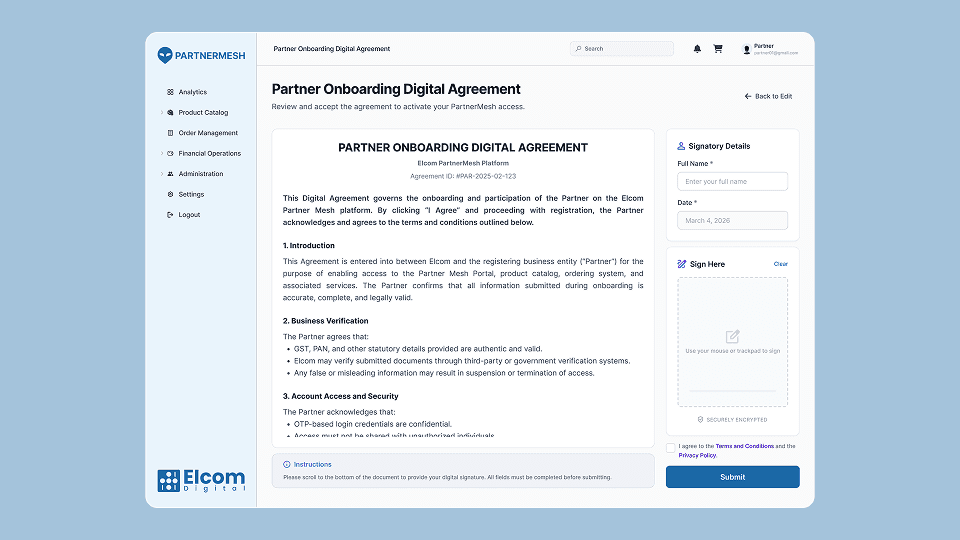
• Digital agreement acceptance

Product Catalog

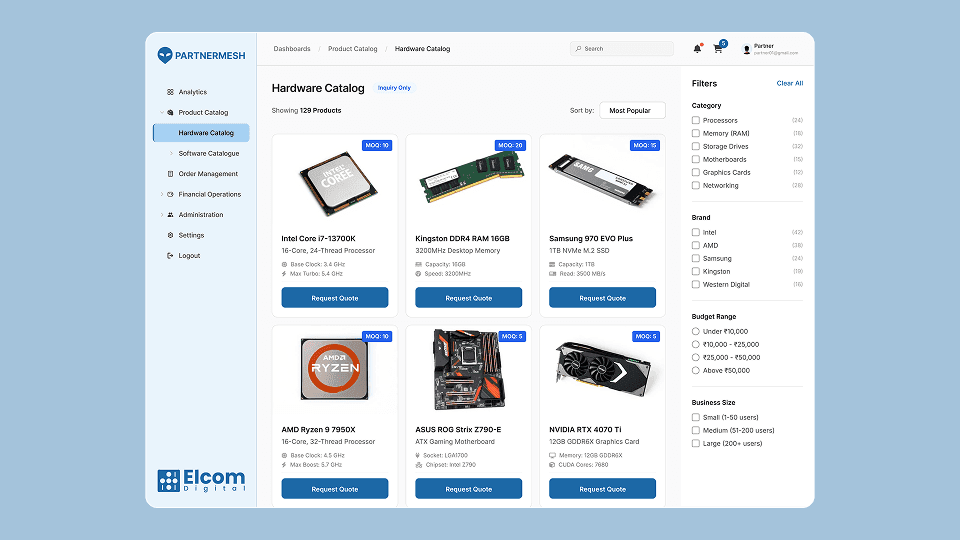
• Hardware catalog browsing
• Software catalog discovery
• Direct purchase and inquiry-based products

Order Management

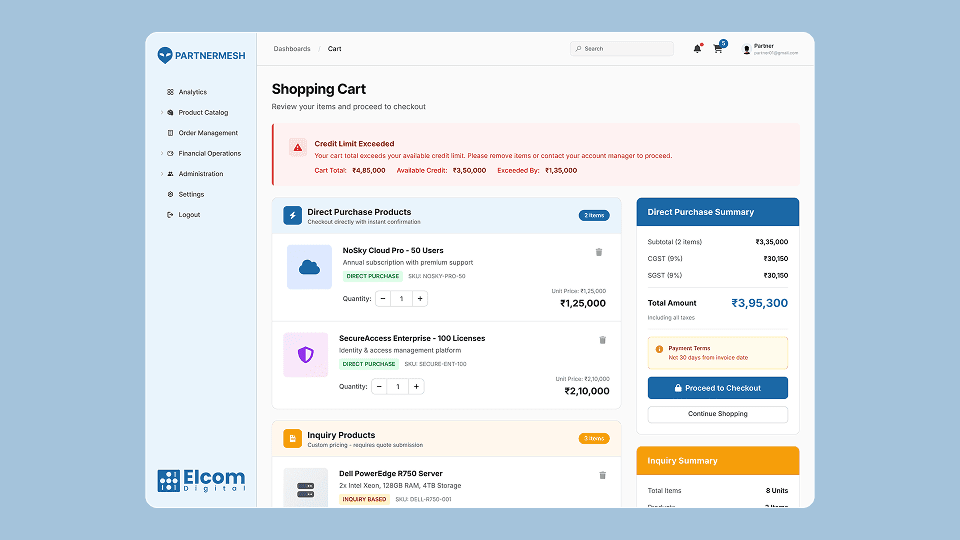
• Shopping cart workflow
• Order review and confirmation
• Order timeline tracking

Financial Operations

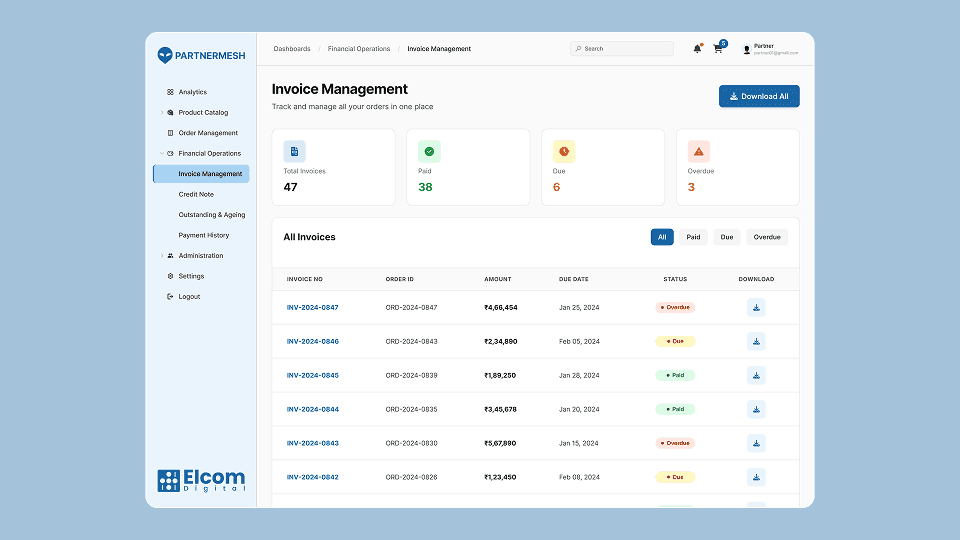
• Invoice management
• Credit notes
• Outstanding invoice tracking
• Payment history and proof uploads

Administration

• User management
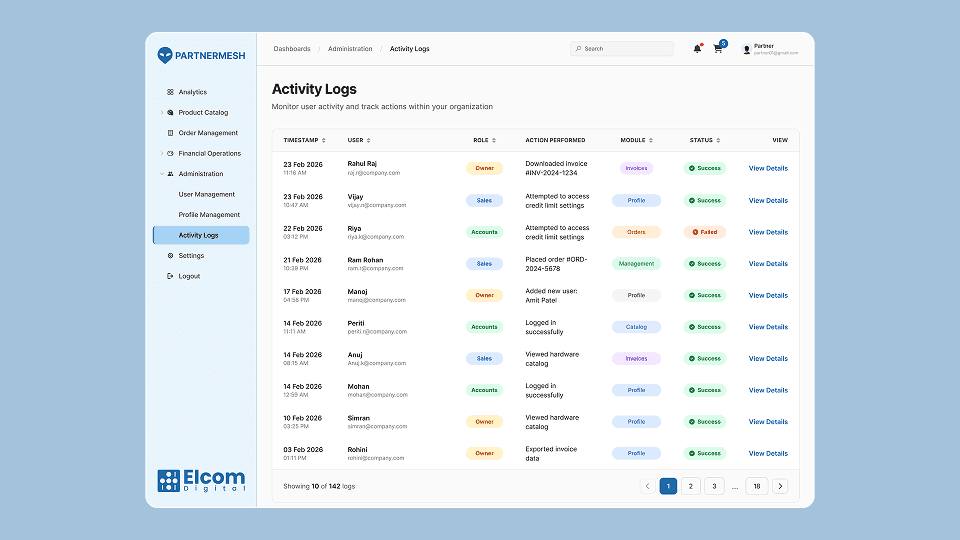
• Activity logs
• Profile management
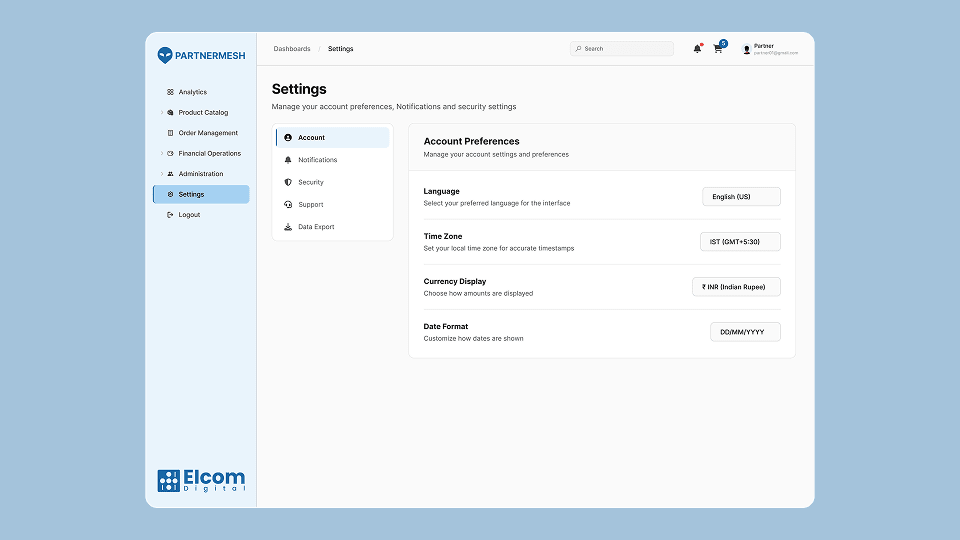
• Security settings

Each module supports a specific stage of the partner distribution lifecycle.

7. Information Architecture

🧭 Information Architecture

The platform architecture follows a structured SaaS dashboard layout.

Primary navigation includes:

Analytics
Product Catalog
Order Management
Financial Operations
Administration
Settings

Within these modules, partners can access specific operational features.

Example architecture:

Product Catalog
• Hardware Catalog
• Software Catalogue
• Third-Party Software

Financial Operations
• Invoice Management
• Credit Notes
• Outstanding & Ageing
• Payment History

Administration
• User Management
• Profile Management
• Activity Logs

This structured architecture allows users to quickly navigate complex operational workflows.

8. Design Process

🎨 Design Process

The design process focused on simplifying complex partner workflows into a clear dashboard experience.

The product design workflow included:

Problem Discovery

Understanding partner workflows for onboarding, ordering, and financial tracking.

Product Architecture

Defining platform modules such as catalog management, orders, financial operations, and administration.

UX Strategy

Designing structured workflows for partner onboarding, product discovery, and financial tracking.

Interaction Design

Creating consistent navigation patterns, structured tables, and dashboard layouts.

Design System Implementation

Developing reusable components and tokens to ensure UI consistency across the platform.

Tools used during the process:

Figma
Design Tokens
Component Libraries

9. Data Visualization Strategy

📈 Analytics & Data Visualization

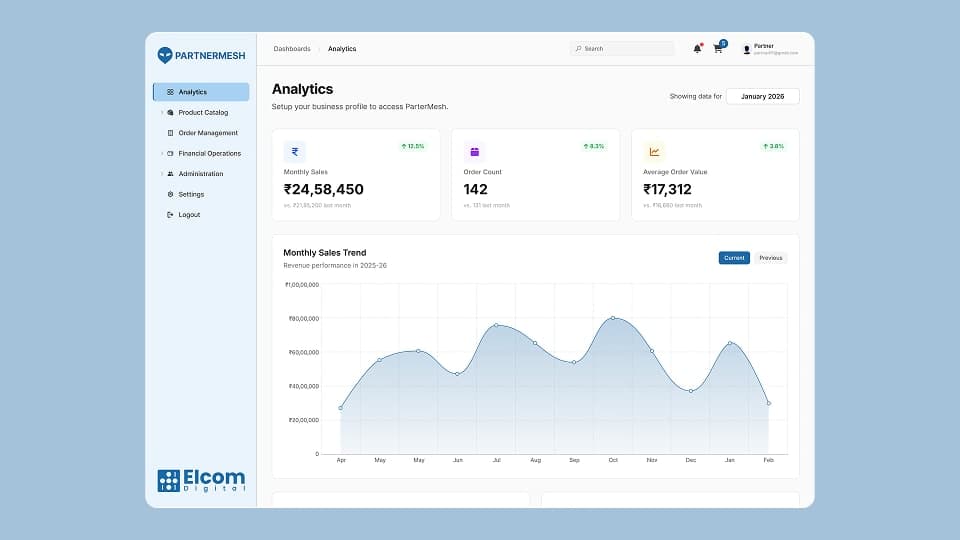
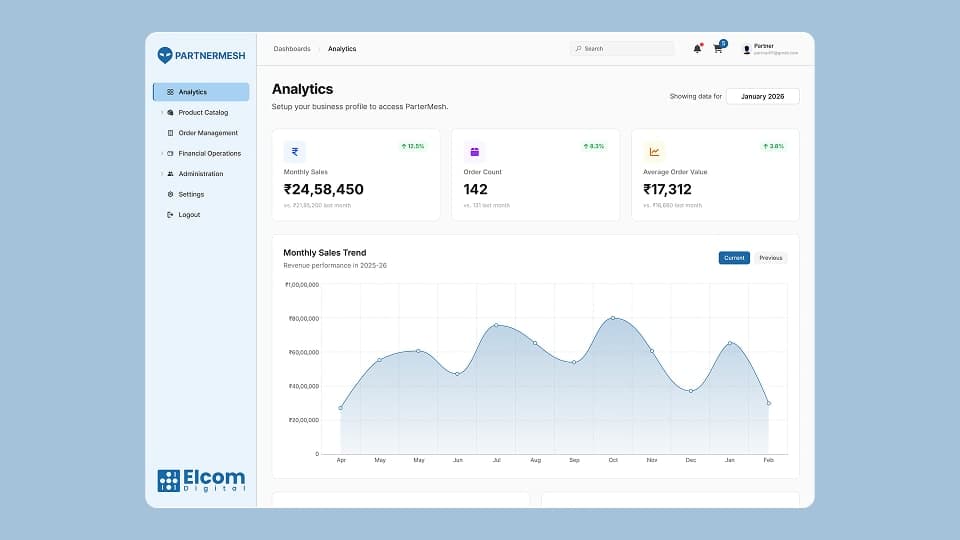
The analytics dashboard provides partners with insights into their business activity.

Key metrics visualized include:

Revenue performance trends
Orders placed and inquiries submitted
Outstanding balances by ageing category
Credit utilization breakdown
Top performing products

Chart types used in the dashboard include:

• Line charts for revenue trends
• Bar charts for outstanding invoice categories
• KPI cards for quick metrics
• Product performance tables

The visualization strategy focuses on clear financial visibility and operational insights.

10. Key Screens

🖥 Key Product Screens

The platform includes multiple screens supporting the partner workflow.

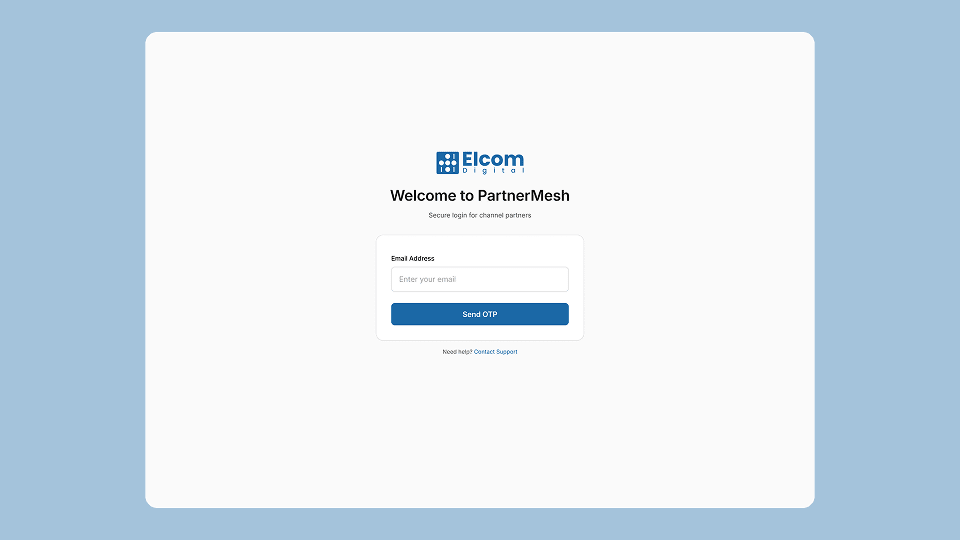
Authentication

• Login (Email)
• Login (OTP)

Partner Onboarding

• Business Profile Setup
• Business Profile Edit
• Digital Agreement

Dashboard

• Analytics
• Notifications

Product Catalog

• Hardware Catalog
• Hardware Product Detail
• Software Products
• Third-Party Software Catalog

Orders

• Cart Page
• Order Review
• Order Success
• Order Management
• Order Timeline

Financial Operations

• Invoice Management
• Invoice Details
• Credit Notes
• Outstanding & Ageing
• Payment History

Administration

• User Management
• Activity Logs
• Profile Management
• Settings

Key Screens 1
Key Screens 2
Key Screens 3
Key Screens 4
Key Screens 5
Key Screens 6
Key Screens 7
Key Screens 8
Key Screens 9
Key Screens 10

11. Design Challenges

Design Challenges

Designing PartnerMesh required solving several complex UX challenges.

Complex Business Workflows

Partner ecosystems involve multiple workflows including onboarding, ordering, financial tracking, and user management.

The challenge was to simplify these workflows into a clear dashboard experience.

Financial Transparency

Invoices, credit limits, and payment statuses required careful visualization to avoid confusion.

The solution was to use structured tables and visual summaries.

Scalable Navigation

The platform includes many modules, so the navigation needed to remain clear while supporting scalability.

A hierarchical sidebar navigation solved this challenge.

12. Key Learnings

📚 Key Learnings

Designing PartnerMesh reinforced several important product design principles.

• Complex operational systems require strong information architecture
• Financial workflows demand clear data presentation
• Role-based access control improves platform security and usability
• Scalable design systems are essential for enterprise SaaS platforms

The project highlighted the importance of balancing product complexity with usability.

13. Final Outcome

🏁 Final Outcome

PartnerMesh successfully transforms traditional partner distribution workflows into a structured digital platform.

The system enables partners to:

• Discover products through centralized catalogs
• Manage orders and delivery timelines
• Track invoices and financial obligations
• Monitor business analytics and credit limits
• Manage internal users and activity logs

The final product delivers a scalable B2B partner ecosystem platform that improves operational efficiency and transparency across distribution networks.

14. Figma Prototype Embed