Website

RareBlocks NFT Marketplace

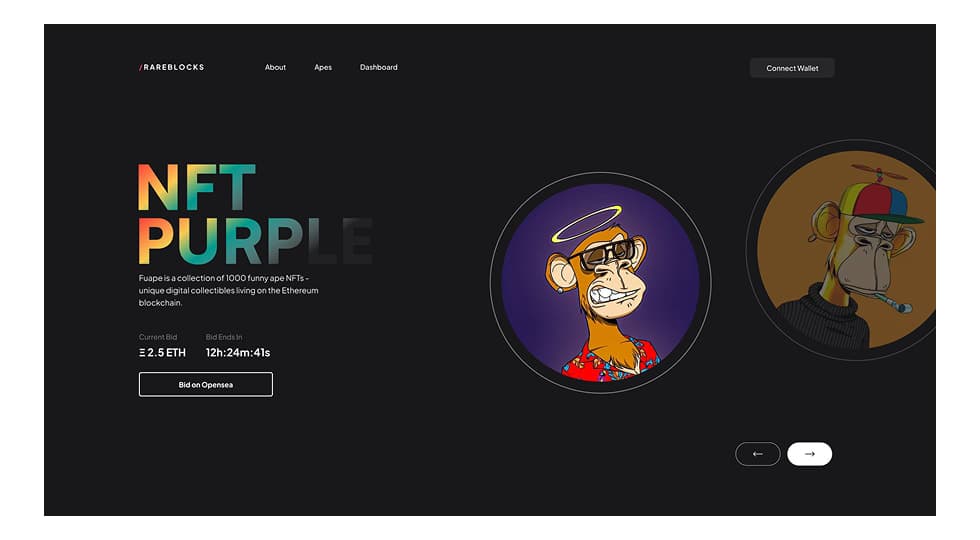
Designed a modern NFT marketplace landing page focused on showcasing digital collectibles, enabling wallet connections, and encouraging users to participate in NFT bidding and trading.

WebsiteWeb3NFT PlatformUI Design
RareBlocks NFT Marketplace - UI/UX design case study by Saurabh Pansari

1. Overview & Problem Statement

Project Overview

RareBlocks is a conceptual NFT marketplace platform designed to showcase digital collectibles and allow users to participate in NFT auctions through blockchain technology.

The platform focuses on presenting NFT artwork in an engaging visual format while providing key information such as bid value, countdown timers, and wallet connectivity.

Problem Statement

Many NFT platforms overwhelm users with complex interfaces and unclear transaction flows.

New users often struggle to understand how to connect wallets, view bids, or participate in auctions. The challenge was to design a visually engaging NFT marketplace that simplifies the discovery and bidding process.
2. Goals & Target Audience

Goals

The primary goal was to design a landing page that highlights NFT collectibles while encouraging users to connect their wallets and participate in auctions.

The interface needed to balance strong visual presentation with essential blockchain interaction features.

Target Audience

The target audience includes NFT collectors, digital art enthusiasts, and cryptocurrency users interested in trading unique digital assets.

The platform also targets newcomers exploring the Web3 ecosystem who require a simple and intuitive user experience.

3. Information Architecture & Navigation

Information Architecture

The structure of the page prioritizes NFT artwork visibility while maintaining access to essential marketplace features.

Users are introduced to featured NFTs immediately upon landing, followed by bidding information and navigation to additional collections.

Navigation Structure

The top navigation includes sections such as About, Apes Collection, and Dashboard.

A prominent “Connect Wallet” button allows users to quickly link their crypto wallet and start interacting with the marketplace.

4. Design Strategy

Design Approach

The design focuses on creating a futuristic Web3 aesthetic that reflects the digital nature of NFT marketplaces.

Dark backgrounds were used to highlight vibrant NFT artwork and gradient typography that represents digital ownership and uniqueness.

Visual Direction

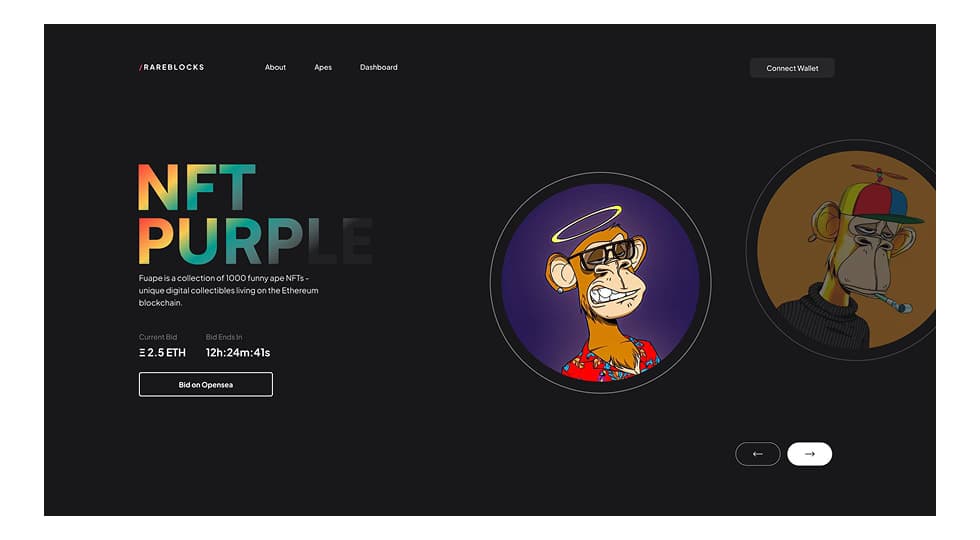
Circular NFT display cards emphasize the collectible nature of the artwork while keeping the interface visually balanced.

Gradient headline typography and glowing highlights help reinforce the modern Web3 identity.

5. Visual Design & Key Screens

Visual Design

The visual style combines a dark interface with colorful NFT artwork to create strong visual contrast.

Gradient typography and large artwork containers emphasize the uniqueness of each digital collectible.

Key Screens

The hero section introduces the featured NFT collection and highlights important details such as current bids and countdown timers.

NFT cards display individual ape collectibles with distinctive styles, creating a gallery-like browsing experience for users.

Visual Design & Key Screens 1

6. Interaction & Learnings

Interaction Design

Interactive carousel controls allow users to browse different NFT collectibles smoothly.

Wallet connection functionality is placed prominently to guide users into participating in blockchain transactions.

Countdown timers create urgency for bidding while clear bid values help users quickly understand the auction status.

Key Learnings

This project highlighted the importance of balancing strong visual presentation with functional blockchain interactions.

Designing for Web3 platforms requires simplifying complex concepts such as wallet connections and bidding systems to ensure accessibility for both experienced users and newcomers.

7. Figma Prototype Embed